Reading the source
DOS byte commands are decoded as Czech/Slovak Unicode prose with bold, italic, underline and explicit page breaks. Kamenický and Text602 Latin2 profiles are supported; CP852 requires an explicit override.


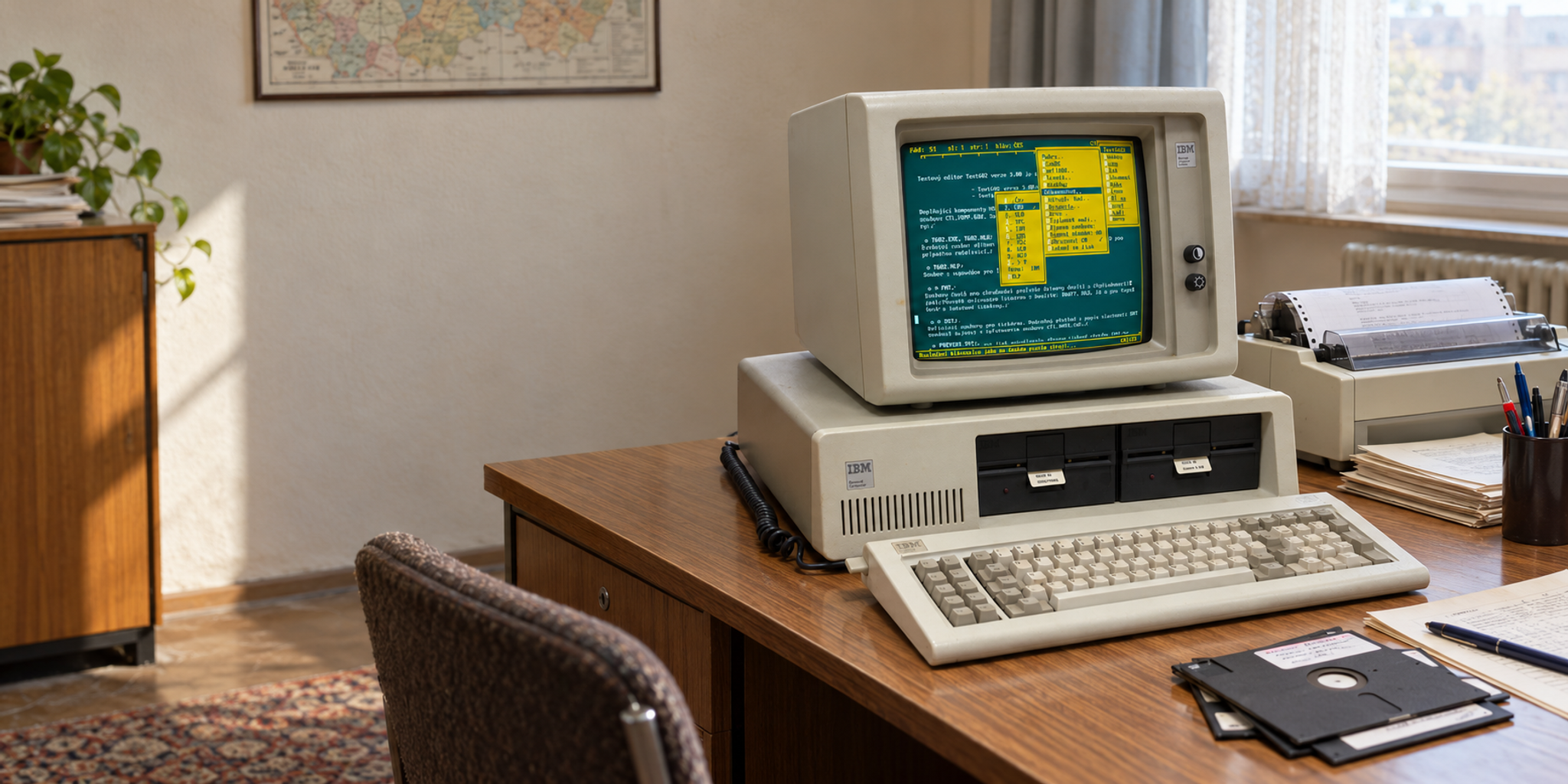
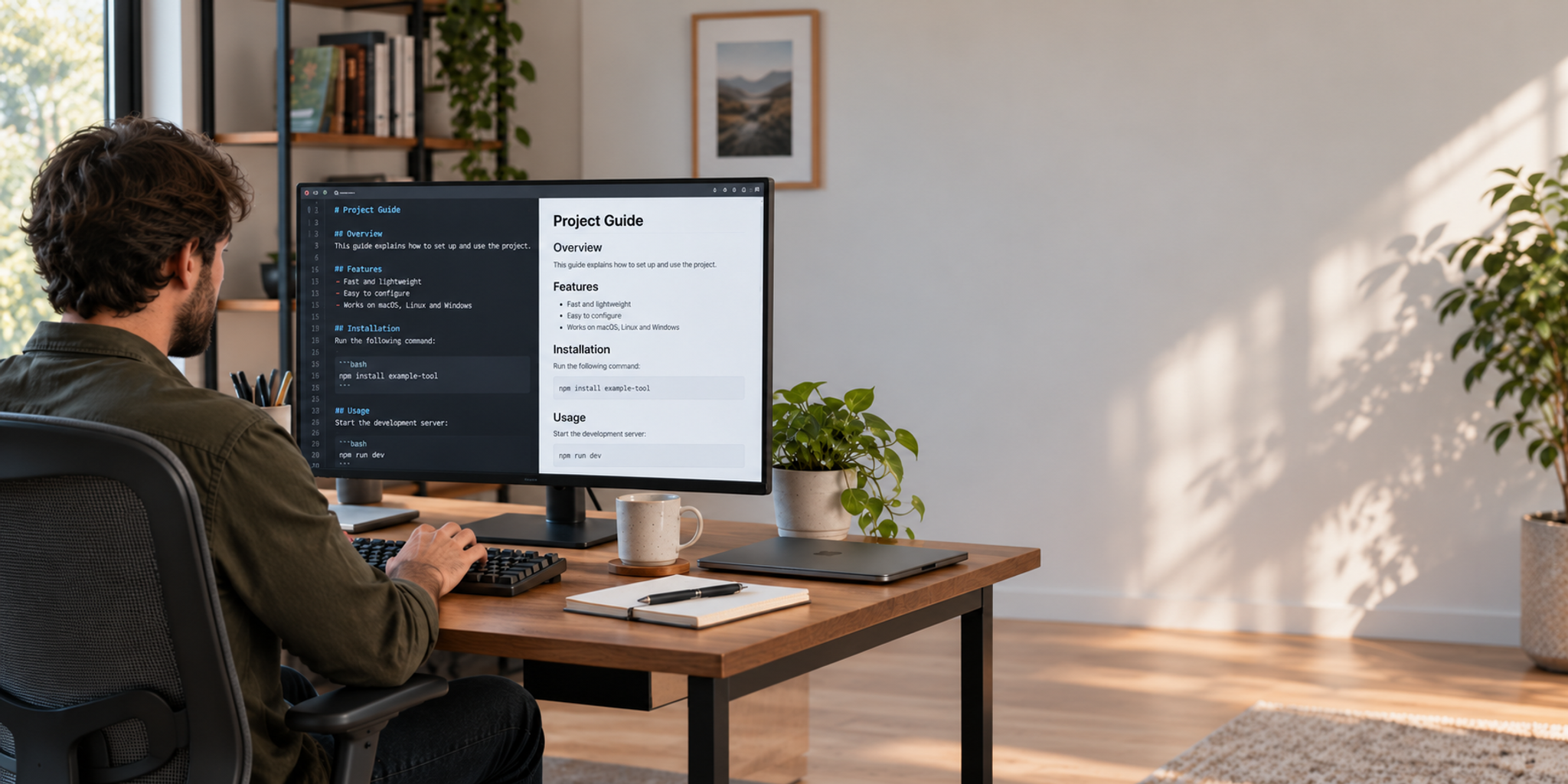
Conversion uses Universal Text Conversion Engine (UTCE), with dedicated source readers, internal data models, transformations and target writers.
DOS byte commands are decoded as Czech/Slovak Unicode prose with bold, italic, underline and explicit page breaks. Kamenický and Text602 Latin2 profiles are supported; CP852 requires an explicit override.
The supported source content is normalized into a shared semantic model and serialized by the target writer. Paragraphs, tables, images, links and metadata survive only where both adapters represent them; target formatting cannot recreate omitted source content.
Supported headings, emphasis, lists, links, tables and footnotes become CommonMark with bounded extensions. The output is editable text; explicit heading anchors and metadata may use UTCE extensions.
Source
.602 / .txt
DOS byte commands are decoded as Czech/Slovak Unicode prose with bold, italic, underline and explicit page breaks. Kamenický and Text602 Latin2 profiles are supported; CP852 requires an explicit override.
Explore T602 format →Target
.md / .markdown / .mdown / .mkd
Supported headings, emphasis, lists, links, tables and footnotes become CommonMark with bounded extensions. The output is editable text; explicit heading anchors and metadata may use UTCE extensions.
Explore Markdown format →DOS byte commands are decoded as Czech/Slovak Unicode prose with bold, italic, underline and explicit page breaks. Kamenický and Text602 Latin2 profiles are supported; CP852 requires an explicit override. Ambiguous headerless encoding needs review. Printer layout is projected; KOI8-CS, OLE and embedded binary graphics are outside the admitted profile.
Supported headings, emphasis, lists, links, tables and footnotes become CommonMark with bounded extensions. The output is editable text; explicit heading anchors and metadata may use UTCE extensions. Font, color and page geometry are lost. Tables need a header row; multiline tabular cells flatten to spaces. Non-heading internal link targets can reject export. Rendering varies by Markdown dialect.
The supported source content is normalized into a shared semantic model and serialized by the target writer. Paragraphs, tables, images, links and metadata survive only where both adapters represent them; target formatting cannot recreate omitted source content. Retain the original if exact typography, layout or complete metadata matters. Reflow is useful for reuse of supported content, but it is not archival reconstruction.
Ambiguous headerless encoding needs review. Printer layout is projected; KOI8-CS, OLE and embedded binary graphics are outside the admitted profile. Retain the original if exact typography, layout or complete metadata matters. Reflow is useful for reuse of supported content, but it is not archival reconstruction. Font, color and page geometry are lost. Tables need a header row; multiline tabular cells flatten to spaces. Non-heading internal link targets can reject export. Rendering varies by Markdown dialect.
Convert locally in your browser. Select documents of the same source format, review the options and download the results. Tested within a bounded profile. Compatibility is limited to the supported profile; review each result.