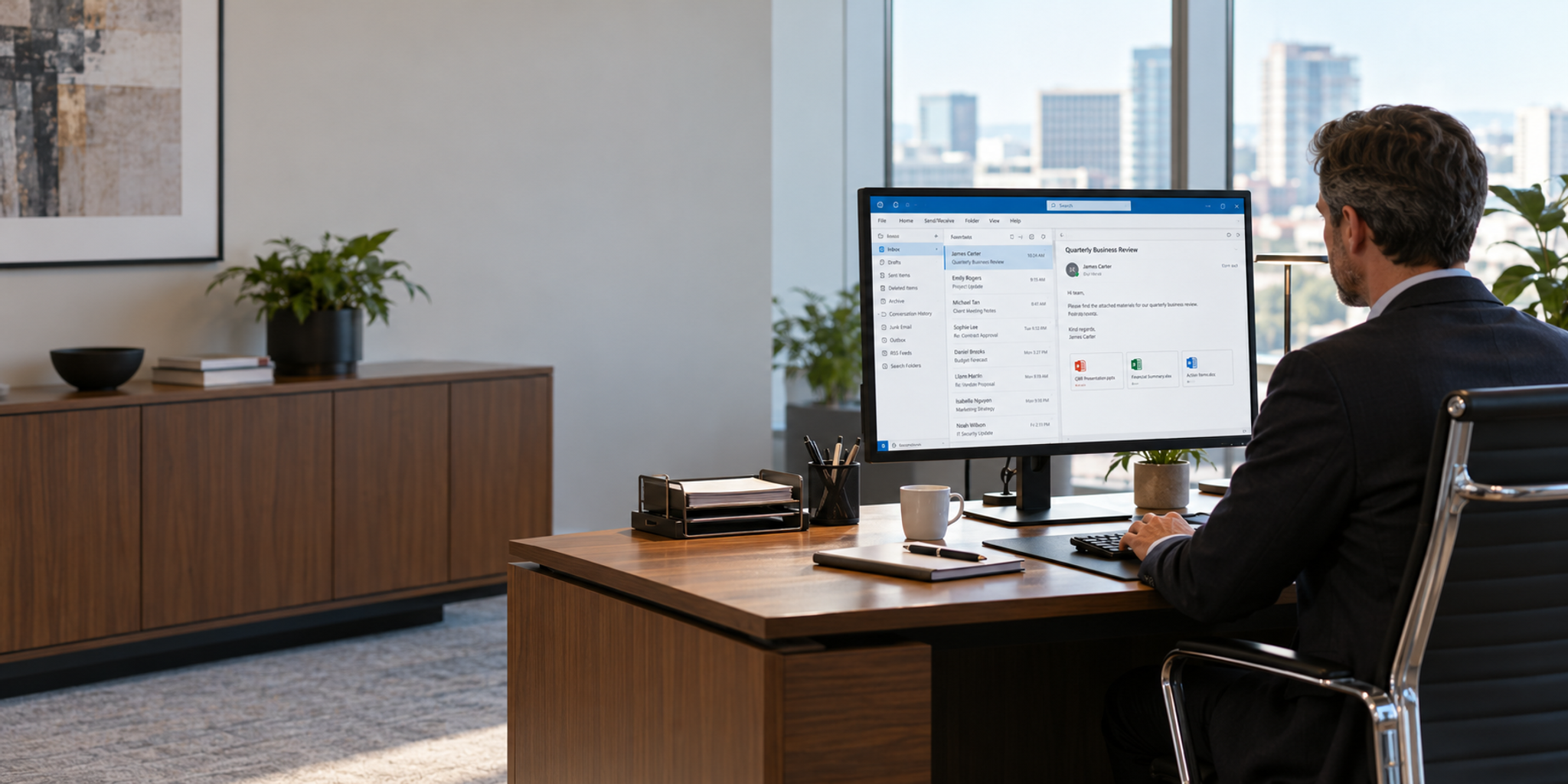
MSG to PDF converter

Source · MSG
Target · PDF

Drop MSG files here

or choose files from your device

Choose files or drop them here (up to 16 MiB each).

Advanced options
  • In your browser
  • No upload
  • Private by design

How to convert a document online

  1. Open a converter and choose files of its source format.
  2. Review the format limits and options, then start conversion.
  3. Download the results and check their content and layout.
Browse all document conversions →

What happens when you convert MSG to PDF?

Conversion uses Universal Text Conversion Engine (UTCE), with dedicated source readers, internal data models, transformations and target writers.

Reading the source

The bounded CFB/MAPI message reader handles Unicode/ANSI properties, recipients and supported HTML/plain or compressed RTF bodies. Message headers, recipients and the supported HTML or plain body become a readable document. Safe embedded CID images and attachment descriptions can enter the projection; remote resources are never loaded.

Structure and transformation

The supported source content is normalized into a shared semantic model and serialized by the target writer. Paragraphs, tables, images, links and metadata survive only where both adapters represent them; target formatting cannot recreate omitted source content.

Writing the target

Semantic content is typeset into new fixed pages with selectable text, headings, lists, tables, supported raster images, links and notes. Supplied local Noto Sans fonts replace source typography; selected title, author and language metadata can be written.

MSG

Source

MSG

.msg

Storage: Compound File BinaryDocument model: MAPI properties and attachment storages

The bounded CFB/MAPI message reader handles Unicode/ANSI properties, recipients and supported HTML/plain or compressed RTF bodies. Message headers, recipients and the supported HTML or plain body become a readable document. Safe embedded CID images and attachment descriptions can enter the projection; remote resources are never loaded.

Explore MSG format →
PDF

Target

PDF

.pdf

Storage: Objects and streamsDocument model: Fixed pages, text and graphics

Semantic content is typeset into new fixed pages with selectable text, headings, lists, tables, supported raster images, links and notes. Supplied local Noto Sans fonts replace source typography; selected title, author and language metadata can be written.

Explore PDF format →

Is MSG → PDF right for you?

Good choice when

  • You need a newly typeset document with fixed pages and selectable text for reading or sharing.
  • You can review the source interpretation and the target limitations before using the result.

Probably not when

  • This PDF is newly typeset, not a facsimile. Line wrapping and pagination can change. Font coverage is bounded; CJK/RTL layout and tagged accessibility are unvalidated. Source forms and signatures do not become working PDF features.
  • You require exact source layout, every metadata field or unsupported interactive features.

MSG to PDF conversion details

Reading the source
The bounded CFB/MAPI message reader handles Unicode/ANSI properties, recipients and supported HTML/plain or compressed RTF bodies. Message headers, recipients and the supported HTML or plain body become a readable document. Safe embedded CID images and attachment descriptions can enter the projection; remote resources are never loaded.
Writing the target
Semantic content is typeset into new fixed pages with selectable text, headings, lists, tables, supported raster images, links and notes. Supplied local Noto Sans fonts replace source typography; selected title, author and language metadata can be written.
Structure and transformation
The supported source content is normalized into a shared semantic model and serialized by the target writer. Paragraphs, tables, images, links and metadata survive only where both adapters represent them; target formatting cannot recreate omitted source content.
Technical evidence
Tested within a bounded profile. Compatibility is limited to the supported profile; review each result.

MIME
application/vnd.ms-outlook → application/pdf
Adapter scope and specifications
Microsoft — MS-OXMSGAdobe — PDF originsPDF Association — ISO 32000

Common questions

What can be read from MSG?

The bounded CFB/MAPI message reader handles Unicode/ANSI properties, recipients and supported HTML/plain or compressed RTF bodies. Message headers, recipients and the supported HTML or plain body become a readable document. Safe embedded CID images and attachment descriptions can enter the projection; remote resources are never loaded. The result is a document projection, not a mailbox message. Arbitrary attachment payloads are not included in target files; signatures are not verified and embedded messages or OLE objects are not activated.

What will the PDF output contain?

Semantic content is typeset into new fixed pages with selectable text, headings, lists, tables, supported raster images, links and notes. Supplied local Noto Sans fonts replace source typography; selected title, author and language metadata can be written. This PDF is newly typeset, not a facsimile. Line wrapping and pagination can change. Font coverage is bounded; CJK/RTL layout and tagged accessibility are unvalidated. Source forms and signatures do not become working PDF features.

How does MSG structure change in PDF?

The supported source content is normalized into a shared semantic model and serialized by the target writer. Paragraphs, tables, images, links and metadata survive only where both adapters represent them; target formatting cannot recreate omitted source content. Retain the original if exact typography, layout or complete metadata matters. Reflow is useful for reuse of supported content, but it is not archival reconstruction.

Will MSG look identical in PDF?

The result is a document projection, not a mailbox message. Arbitrary attachment payloads are not included in target files; signatures are not verified and embedded messages or OLE objects are not activated. Retain the original if exact typography, layout or complete metadata matters. Reflow is useful for reuse of supported content, but it is not archival reconstruction. This PDF is newly typeset, not a facsimile. Line wrapping and pagination can change. Font coverage is bounded; CJK/RTL layout and tagged accessibility are unvalidated. Source forms and signatures do not become working PDF features.

Can I convert MSG to PDF here now?

Convert locally in your browser. Select documents of the same source format, review the options and download the results. Tested within a bounded profile. Compatibility is limited to the supported profile; review each result.